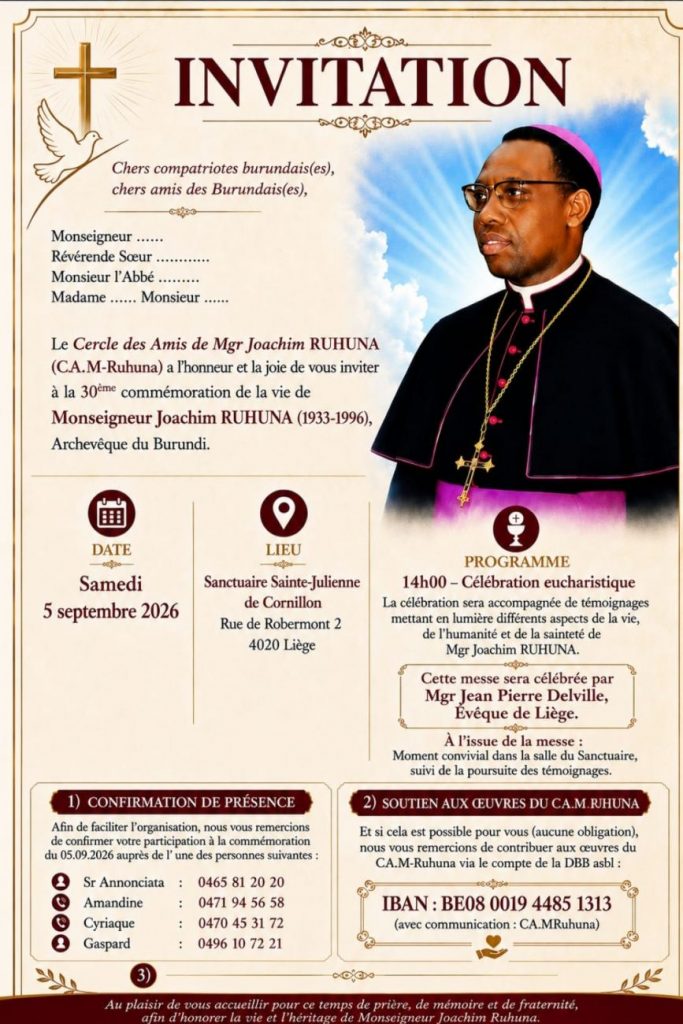
Monseigneur Ruhuna Joachim, a prominent bishop in Ruyigi, Burundi, was born in 1933 and died in 1996, leaving a significant legacy in the region. His active involvement in the community of Ruyigi profoundly impacted its social and educational landscape. Under his influence, Ruyigi developed the largest school network in Burundi, a testament to his dedication to education and community development. Monseigneur Ruhuna Joachim was a figure known for his pastoral care and his ability to connect with people, qualities that defined his tenure as a spiritual leader. He once stated, reflecting his approachable nature, "C’est le hibou."
Building a Foundation
Monseigneur Ruhuna Joachim assumed responsibility for diocesan education in 1973, initiating a period of significant growth in the region's educational infrastructure. This appointment marked a key moment for the diocese, as he embarked on ambitious projects to expand access to learning opportunities. During his tenure, he played a key role in expanding access to schooling within the diocese of Ruyigi, recognizing education as a cornerstone for community upliftment and individual empowerment. His efforts included the establishment of colleges in three distinct locations: Muyaga, Nyenkanda, and Kinyinya. These new institutions were strategically placed to serve various parts of the diocese, ensuring that more young people had the chance to pursue secondary education. The establishment of these colleges contributed significantly to the development of what became the largest school network in Burundi under his leadership, a remarkable achievement for the region. The creation of these colleges aimed to provide essential educational opportunities to a broader population within the diocese, fostering intellectual growth and skill development among the youth.
Beyond the establishment of these colleges, Monseigneur Ruhuna Joachim also dedicated his efforts to developing the small seminary of Dutwe. This institution played a vital role in nurturing future spiritual leaders and educators, further strengthening the educational and religious infrastructure of Ruyigi. His vision for education was full, encompassing both secular and religious learning, thereby creating a strong system that served the diverse needs of the community. His commitment to education was unwavering, and his leadership transformed the educational landscape of Ruyigi, leaving a lasting impact on generations.
Compassion in Action
Monseigneur Ruhuna Joachim's commitment extended beyond education to include the well-being of the community. He established dispensaries operated by nuns, expanding healthcare access within the community, particularly for those in remote areas. These dispensaries became vital centers for health services, providing much-needed medical care and comfort to the sick. He was also recognized for his direct engagement with the faithful, a hallmark of his pastoral approach. According to numerous accounts, Monseigneur Ruhuna Joachim frequently visited parishes and schools, demonstrating a hands-on approach to his ministry. These visits were not merely ceremonial; he actively interacted with parishioners, students, and teachers, listening to their concerns and offering guidance. His commitment extended to personally visiting the sick, demonstrating a profound pastoral approach that emphasized direct interaction and care for individuals within his diocese. This personal touch fostered a deep sense of connection and trust between the bishop and the people he served, reinforcing his role as a compassionate leader.
A Touch of Humor
Monseigneur Ruhuna Joachim was actively involved in various initiatives across Ruyigi, always seeking ways to uplift and support his community. His efforts, as mentioned, included developing the small seminary of Dutwe, which contributed significantly to the region's educational and religious infrastructure. Beyond his formal duties and considerable administrative responsibilities, Monseigneur Ruhuna Joachim was known for his ability to connect with people through humor. This distinctive trait made him highly approachable and beloved by the faithful. An anecdote often cited to illustrate this involved his use of the word 'hibou' (owl) in a way that resonated with the local community, bringing smiles and laughter. This approachable style fostered strong relationships with the faithful throughout his tenure, allowing him to build bridges and inspire people in a unique and memorable way. His legacy is thus defined not only by his monumental achievements in education and healthcare but also by his warmth, humor, and unwavering dedication to the people of Ruyigi.