Burundi and the Great Lakes region experienced a painful media memory in the 1990s, when certain media outlets were reportedly used as instruments of division and for the propagation of ethnic, regional, religious, or inter-state hatred. This historical context shows ongoing discussions regarding the boundaries of free expression. Freedom of expression, according to reports, does not extend to the right to humiliate individuals, stigmatize communities, or intentionally disseminate information that could incite hatred and division. It is key to understand that freedom of expression does not mean the right to say anything; it does not give the right to humiliate a person, stigmatize a community, or deliberately disseminate information likely to provoke hatred and division. This distinction is vital in societies striving for peace and reconciliation.
Echoes of Past Divisions
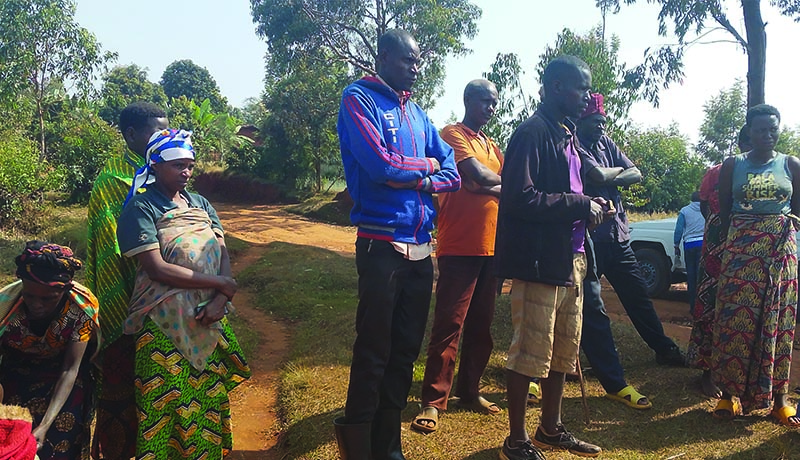
Eric Sindayigaya, an inhabitant of Ngara hill, recalled the painful memories of the 1990s when certain groups were designated by dehumanizing terms such as 'vulture' (Ikinyamwanira) or 'serpent'. Sindayigaya stated, "ce genre de messages sèment la haine et la discorde dans la société et les conséquences ont été désastreuses au regard des massacres qui s’en sont suivis." Salvator Kayibigi noted the negative role played by the newspaper Nyabusorongo in Burundi in 1993, alongside Radio Mille Collines in Rwanda before the 1994 genocide, in disseminating such divisive messages. Ferdinand Ndayizeye, the deputy chief of Ngara hill, further noted that certain media outlets contributed to fueling mistrust and divisions in 2015, demonstrating that the threat of media misuse is not confined to the distant past.
Modern Threats and Responsibilities
A media message that employs terminology reminiscent of historical conflicts, attributes blame for societal misfortunes to a specific community, or cultivates an atmosphere of fear and suspicion holds the potential to reactivate latent societal divisions. Indeed, a media message that uses terms recalling past oppositions, designates one community as responsible for another's misfortunes, or fosters fear and suspicion can reawaken dormant 'demons' within society. This can lead to a resurgence of historical animosities and conflicts. Gabriel Ndikuriyo warned that the circulation of hate messages across social networks presents a significant risk, capable of leading to further divisions and conflicts. He stated that this digital proliferation makes the threat of renewed hostilities "very real," emphasizing that the risk of divisions and wars is very real due to the widespread circulation of hate messages on social networks. The ease with which information, both true and false, can spread online demands heightened vigilance and responsibility from all users and platforms.
The Path to Peace
Abbé Lambert Riyazimana, a university professor and head of information and communication services in the Ngozi diocese, emphasized the dual nature of communication in societies marked by conflict. Riyazimana stated that words possess the capacity to reassure, unite, and facilitate rebuilding, but they can also revive past anxieties, reopen historical wounds, and foster mutual suspicion among different communities. This perspective notes the critical role of media in shaping societal cohesion or division, particularly in post-conflict environments where historical grievances remain sensitive. Understanding this dual capacity is fundamental for responsible media practice.
The ongoing effort to combat hate messages transcends mere regulatory frameworks, professional charters, or journalistic methodologies. It is fundamentally a human concern, according to observers. The fight against hate messages is not only a matter of regulations, charters, or journalistic techniques but also a profoundly human question, requiring empathy, understanding, and a commitment to shared humanity. This approach suggests that effective solutions require a deeper engagement with the underlying social and psychological factors that contribute to the spread of divisive content, rather than relying solely on technical or legal instruments. The challenge involves fostering a collective responsibility for communication that prioritizes peace and reconciliation, building bridges rather than walls through careful and ethical dissemination of information.