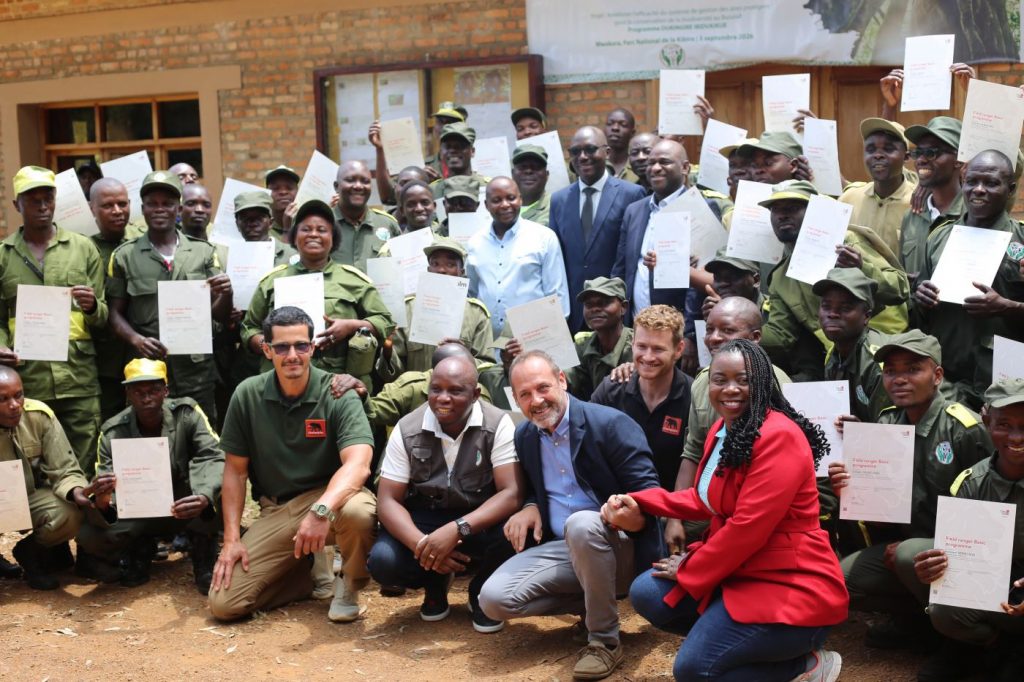
A closing and diploma ceremony for eco-guards of the Kibira and Rusizi National Parks took place on September 3, 2026, in Mwokora, Bukinanyana commune, Bujumbura province. The event, held in the heart of Bukinanyana commune within Bujumbura province, marked a significant milestone in Burundi's conservation efforts. It celebrated the completion of initial training for 52 eco-guards and operational leadership training for eight cadres. This full training initiative was conducted as an integral part of the project titled "Améliorer l’efficacité du système de gestion des aires protégées pour la conservation de la biodiversité au Burundi." This ambitious project, whose name translates to "Improving the effectiveness of the protected areas management system for biodiversity conservation in Burundi," aims to fundamentally enhance the effectiveness of protected area management for biodiversity conservation throughout the country. The successful completion of this training represents a key step towards strengthening the operational capabilities of those tasked with safeguarding Burundi's invaluable natural heritage.
Training Details and Objectives
The intensive training program for the eco-guards and cadres spanned a period of fifteen weeks, running from May 30 to August 30, 2026. During this dedicated period, the 52 eco-guards underwent full instruction covering a diverse range of critical subjects essential for their roles. Their meticulously designed curriculum included in-depth training on international standards for conservation, equipping them with a global perspective on best practices. They also received instruction on modern technologies applicable to wildlife protection, ensuring they are proficient in utilizing contemporary tools for surveillance and enforcement. A significant portion of their training focused on Burundi's specific legal framework pertaining to biodiversity and protected areas, providing them with the necessary legal foundation for their duties. Additionally, the training placed a strong emphasis on human rights principles, ensuring ethical conduct in all their interventions, and detailed intervention procedures for various scenarios encountered in their daily responsibilities. The eight cadres, who also participated in this program, received specialized training focused on operational leadership, preparing them to guide and manage conservation teams effectively.
The primary objective of this intensive training was to significantly enhance the operational capacity and effectiveness of the eco-guards, thereby improving the overall management of protected areas. Data collected prior to the training indicated significant gaps in coverage within key protected areas, noting the urgent need for such an intervention. Before the program commenced, patrol coverage in the zones and natural parks of Kibira did not exceed 48.4%, illustrating a substantial challenge in monitoring and protecting these vital ecosystems. The initiative was specifically designed to address such deficiencies by equipping the eco-guards with the necessary skills and knowledge to improve surveillance, strengthen enforcement mechanisms, and bolster overall biodiversity protection efforts across all of Burundi's national parks. This enhanced capacity is expected to lead to more strong and consistent protection of the nation's rich biodiversity.
Project Funding and Partnerships
The "Améliorer l’efficacité du système de gestion des aires protégées pour la conservation de la biodiversité au Burundi" project is implemented through a strategic partnership with the Office burundais pour la protection de l’Environnement (OBPE), which plays a key and central role in its execution and oversight. Financial support for this critical initiative comes from a strong joint effort by several key international partners. These include the European Union, which contributes significantly to global conservation efforts; the Kingdom of Belgium, demonstrating its commitment to environmental sustainability; and the United Nations Development Programme (PNUD), a leading organization in fostering sustainable development worldwide. This multi-faceted funding structure shows the international recognition of the importance of biodiversity conservation in Burundi.
The PNUD, a principal partner, affirmed its unwavering commitment to the ongoing conservation efforts in Burundi. "The PNUD will remain alongside the government of Burundi, OBPE, communities, and its partners to continue this momentum," the organization stated, emphasizing its long-term dedication. It further noted the profound significance of the recent training, adding a powerful call to action: "Let us make this graduation a starting point for a new stage in the protection of Kibira, Rusizi, and Burundi's exceptional natural heritage." This collaborative, multi-partner approach, involving governmental agencies, international bodies, and local communities, aims to ensure the long-term sustainability and effectiveness of biodiversity conservation strategies within Burundi's protected areas. The combined resources and expertise of these partners are key for achieving the project's ambitious goals.
Official Statements and Future Outlook
To further strengthen modern, credible, and transparent management of the national parks, two advanced operation rooms were installed. The establishment of these specialized rooms is a strategic component of a broader, full strategy designed to enhance the operational capabilities and oversight within Burundi's protected areas. This critical infrastructure aims to provide centralized hubs for coordinating various conservation activities, efficiently processing vital data collected from patrols and monitoring efforts, and ensuring accountability across all aspects of conservation work. The initiative seeks to integrate advanced management practices, moving towards a system that supports effective, evidence-based decision-making and optimal resource allocation for biodiversity protection. These operation rooms are expected to significantly facilitate improved communication among eco-guards and park management, enabling real-time monitoring of park activities. This capability will contribute to more efficient and rapid responses to emerging conservation challenges, such as poaching or illegal incursions. This development represents a tangible and forward-looking step in modernizing the management framework for national parks, aligning directly with the project's overarching goal of improving the effectiveness of protected area systems in Burundi for generations to come.