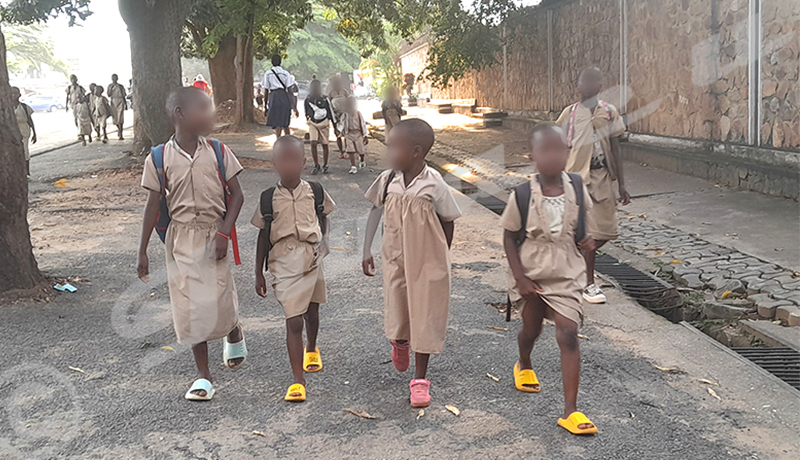
Burundi's policy of free education up to the ninth year of fundamental schooling, implemented in 2013 with the introduction of a new education system, is reportedly being undermined by unofficial fees levied on parents. This extension of free education in 2013 was a significant step, broadening the scope beyond primary schooling to encompass a more full fundamental education cycle. Despite this clear policy, parents in various communes, including Ntahangwa, confirm paying charges for their children's enrollment. These payments are often described as mandatory contributions, creating a financial barrier to education. One parent in Ntahangwa commune reported paying 3,000 FBu per trimester for a child in the 5th year and 13,000 FBu for a child in the 8th year, noting the varying costs imposed at different educational levels. This parent stated, "J’ai payé cette somme afin d’avoir cette place" (I paid this sum to secure this place), showing the perceived necessity of these payments. These payments directly contradict the stated government policy of free access to fundamental education, raising concerns about equitable access for all students.
Policy Origins and Scope
Burundi's policy of free primary education was initially established by a presidential decision announced on August 26, 2005. This landmark decision marked a key moment in the country's education sector, aiming to remove financial obstacles to schooling. This initiative began implementation for the 2005-2006 school year, making primary education accessible to a wider population. The policy aimed to ensure access to fundamental schooling for all children across the country, recognizing education as a fundamental right. The subsequent expansion of free education in 2013, extending it up to the 9th year of fundamental education with the new education system, further solidified the government's commitment to broad educational access. This expansion meant that the entire fundamental cycle, from the first year to the ninth, was officially designated as free.
Further formalizing aspects of education funding and acknowledging the financial realities of running schools, a joint ministerial ordinance n°620/540/834/2019 was issued on May 2, 2019. This ordinance specifically addresses the compensation budget allocated for school fees, indicating official recognition of certain operational costs associated with schooling despite the overarching policy of free education. The ordinance outlines financial mechanisms intended to support the system, providing a framework for how schools are to be funded in the absence of direct fees from parents. This legislative act aimed to reconcile the principle of free education with the practical financial needs of educational institutions.
Parents Bear the Financial Burden
Despite the existence of these policies and financial provisions, parents continue to face demands for payments. A parent in Mukaza commune reported paying a substantial 20,000 FBu contribution to secure a place for their child in 8th grade in a local school. This payment was made despite the official policy, illustrating the persistent challenges families encounter. The Ministry of National Education and Scientific Research has repeatedly stated that first-year fundamental students are not to be subjected to enrollment fees, emphasizing that enrollment at this level is entirely free. This directive is a cornerstone of the free education policy, designed to ensure that the youngest learners can begin their schooling without financial impediment. The Ministry has clarified that students admitted to the next grade should not be required to re-enroll and must retain their places automatically, preventing schools from imposing additional fees for continuing students.
The compensation budget provided by the government for school fees has been increased from 500 to 600 FBu per student per trimester. This adjustment aims to support the financial mechanisms outlined in the joint ministerial ordinance n°620/540/834/2019, providing schools with additional funds to cover operational expenses. This increase reflects an effort by the government to enhance the financial support available to schools, thereby reducing the temptation or perceived necessity for schools to charge unofficial fees. Despite these measures and the increased allocation, parents continue to report additional charges, indicating a disconnect between policy and practice on the ground. One parent previously stated, "J’ai payé cette somme afin d’avoir cette place," noting the ongoing financial pressure faced by families seeking to educate their children. The continued collection of these contributions places a direct financial burden on households, often disproportionately affecting low-income families, and fundamentally challenging the principle of free education. These unofficial fees can lead to exclusion for children whose parents cannot afford them, undermining the very goal of universal access.
Advocates Call for Realization
A correspondence from the Provincial Directorate of Education of Bujumbura, dated August 6, 2026, reminded school principals about the strict adherence to school enrollment instructions. This directive aimed to reinforce the government's policy on access to education and ensure that all schools were complying with the established regulations. The correspondence explicitly stated that forced financial contributions for bench manufacturing or any other condition related to admission are prohibited. This measure targets specific practices that have reportedly created financial barriers for students, such as demands for funds to purchase school furniture. The issuance of such a directive shows the authorities' awareness of these illicit practices and their commitment to curbing them.
Financial provisions exist to support the free education policy, demonstrating a continued governmental commitment. The state budget for the 2024-2025 fiscal year allocated over 5.2 billion FBu specifically for the compensation of school fees. This substantial allocation is intended to cover the costs that schools would otherwise charge parents, reinforcing the principle of free access to education. This allocation demonstrates continued government commitment to funding education access, even as reports of unofficial fees persist across various communes. The policy aims to ensure that all children can enroll and attend school without financial impediments, aligning with the principle of free fundamental education and promoting equitable opportunities for all Burundian youth. The persistent reports of unofficial fees, however, suggest that while the policy and financial commitments are in place, their effective implementation and enforcement remain a significant challenge.