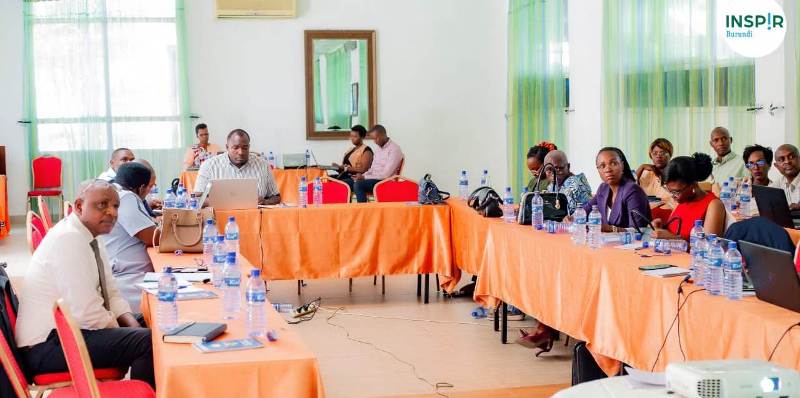
Burundian trade unions Cosybu and CSB, in partnership with Inspira, organized an advocacy workshop on Thursday, September 3, 2026, focused on the ratification of International Labour Organization (ILO) conventions. The workshop, held in Burundi, also featured the presentation of a study examining corporate social responsibility and duty of vigilance within the country. The organizations stated that the primary goal behind advocating for these conventions is to enhance production across Burundian companies, believing that improved working conditions directly contribute to greater efficiency and output.
Key ILO Conventions Targeted
Cosybu and CSB are advocating for the ratification of several key International Labour Organization (ILO) conventions. These conventions represent fundamental principles for decent work and worker protection globally. Among these are Convention 155, which addresses safety and health at work, and Convention 187, establishing a promotional framework for safety and health at work. The unions are also pushing for the adoption of Convention 122 on employment policy, which aims to promote full, productive, and freely chosen employment. Additionally, they are advocating for Convention 120 concerning benefits for work accidents and occupational diseases, which seeks to ensure adequate compensation and care for workers injured or falling ill due to their employment.
Their advocacy further includes Convention 102 on social security and minimum standards, a foundational instrument for establishing full social protection systems. They also highlight Convention 160 regarding employment services, which promotes the establishment of public employment services to assist job seekers and employers. Convention 167, focused on safety and health in construction, is also a priority due to the inherent risks in this sector. The list further extends to Convention 189 for domestic workers, aiming to provide them with the same basic labor rights as other workers, and Convention 190, which pertains to biological hazards at work, addressing emerging health risks in various industries. These conventions collectively aim to create a more equitable and safer working environment for all Burundian laborers.
Study Notes Workplace Challenges
The study presented during the workshop indicated that several worker protection laws are respected within four specific agro-food and mining companies in Burundi. This suggests a baseline level of compliance with existing regulations in these particular establishments. However, the findings also noted a need for further improvements to the overall workplace climate in these same establishments, indicating that legal compliance alone does not guarantee optimal working conditions. The research additionally revealed an absence of established dialogue frameworks and worker unions in some of the surveyed companies, pointing to potential gaps in employee representation and communication channels. This lack of formal structures can hinder effective resolution of workplace issues and prevent workers from having a collective voice.
The study noted that some company managers harbor negative perceptions of unions, viewing them as competitors or rivals rather than collaborative partners. This perspective contributes significantly to the challenges in establishing effective worker representation and fostering a conducive environment for dialogue between management and employees. Such adversarial views can impede progress in labor relations and undermine efforts to improve working conditions. The findings suggest that despite adherence to certain legal protections, significant work remains to enhance industrial relations and ensure full worker rights across these sectors, moving beyond mere compliance to genuine collaboration and respect.
Path to Improved Labor Relations
Improving the work climate in Burundi necessitates collaboration between employers and workers, according to the unions involved in the advocacy workshop. This joint effort is considered essential for fostering a productive and equitable working environment, where both parties can contribute to sustainable growth and worker well-being. Cosybu and CSB stated that their objective is to raise awareness among both employees and management regarding existing labor laws. This initiative aims to ensure that all parties understand their rights and obligations, promoting compliance and better industrial relations across various sectors. By fostering a deeper understanding of labor legislation and the benefits of social dialogue, the unions hope to build a foundation for stronger, more respectful, and ultimately more productive workplaces throughout Burundi.