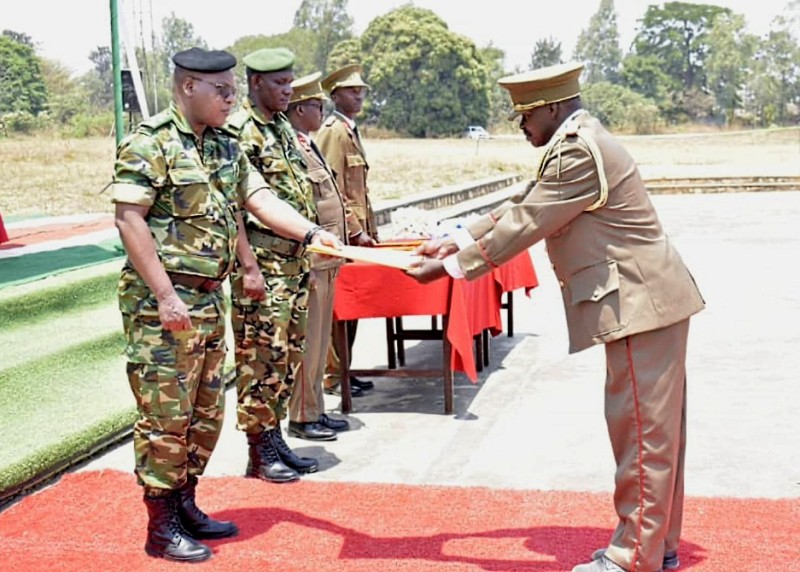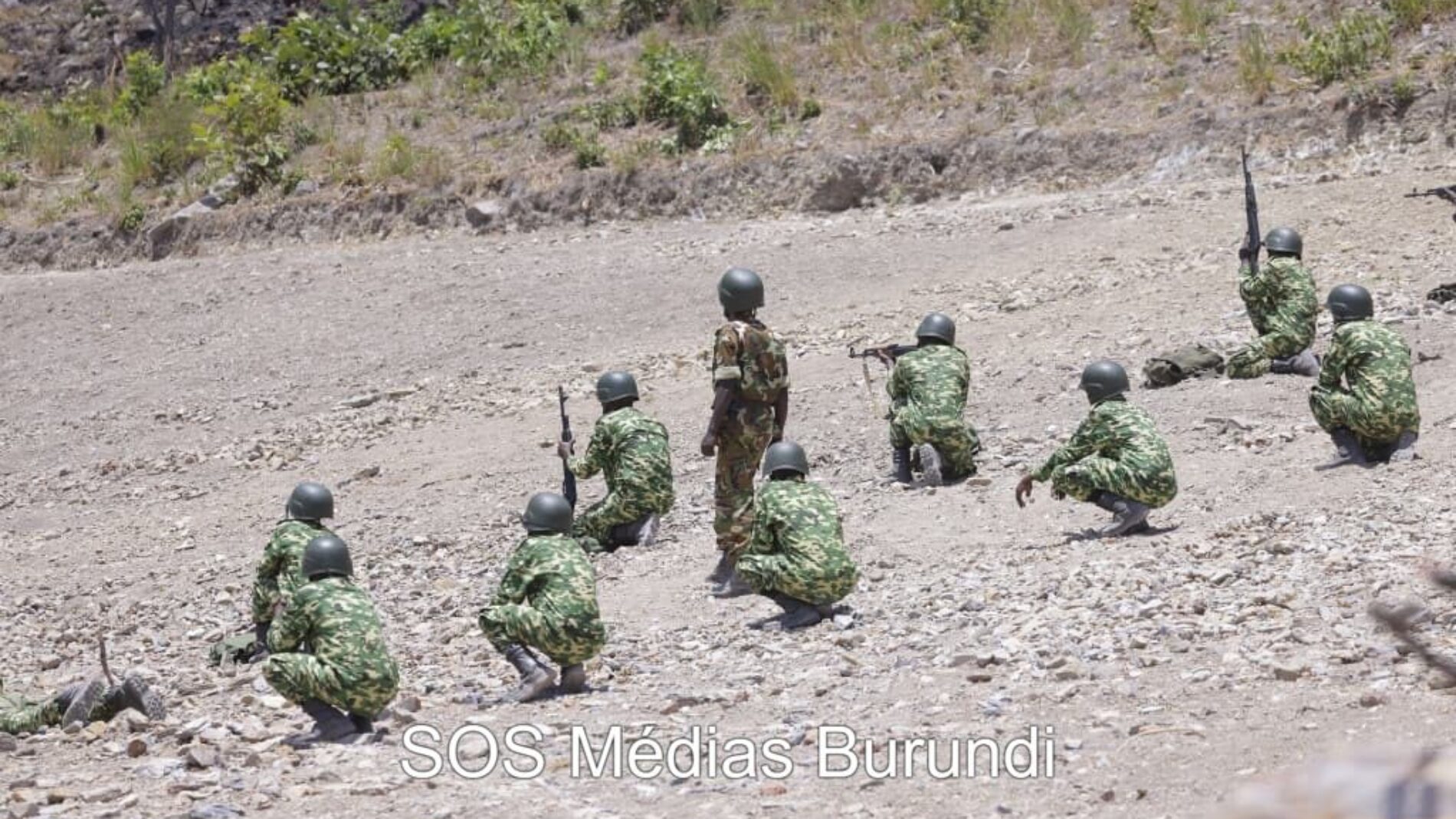
President Évariste Ndayishimiye attended a ceremony in Kigarika, Ruyigi commune, Buhumuza province, on Thursday, where the first promotion of the Force de réserve et d’appui au développement (FRAD) was awarded their berets. The event on September 3, 2026, marked the completion of three months of training for 231 FRAD members. During the ceremony, the newly trained FRAD members demonstrated various combat techniques, showcasing the skills acquired during their intensive program. The awarding of berets signified their formal integration into the FRAD, a development that has drawn considerable attention.
Military Ceremony Unfolds
The ceremony occurred amid a substantial security force presence around the site and throughout Ruyigi town. This heightened security context showed the significance of the presidential visit and the military event. Activities during the event included an inspection of troops by the Head of State, a symbolic planting of trees, and demonstrations of various combat techniques by the newly graduated FRAD members. These demonstrations offered a glimpse into the nature of the training provided at Kigarika. General Prime Niyongabo, Chief of General Staff of the Burundian National Defence Force (FDNB), was present at the proceedings, indicating the high-level military endorsement of the FRAD program.
Despite the presence of high-ranking officials and the ceremonial nature of the event, President Évariste Ndayishimiye did not deliver a speech during the ceremony. This absence of a presidential address left many questions unanswered regarding the future role and scope of the FRAD. The announcement of the presidential visit was made to public media late the night before the event, providing little advance notice for preparations or public awareness. While the presidential program indicated an arrival at 9 AM, the president arrived approximately two hours later than scheduled, causing some delays in the proceedings. Journalists covering the event were restricted to pre-determined locations and were unable to move freely, limiting their ability to gather full information and perspectives. This restriction on media access is consistent with a pattern of controlled information dissemination observed in similar high-security events. Security structures located near Kigarika include the 22nd Commando Battalion camp in Murehe, the Ruyigi police station, and the Rapid Intervention Mobile Group (GMIR), noting the already strong security infrastructure in the immediate vicinity of the training facility.
Kigarika's Shifting Role
Kigarika, once a public seed center, now functions as a military training facility, reportedly hosting members of the Imbonerakure. This transformation of the site shows a broader trend in the region, where civilian infrastructure is being repurposed for military or paramilitary training. The shift from an agricultural center to a military training ground represents a significant change in the area's function and perception. Ruyigi town and its environs exhibit a substantial presence of military and police forces, alongside youth members affiliated with the ruling party. This reinforced presence suggests a concerted effort to maintain security and influence in the area, with the Imbonerakure playing an increasingly visible role. The concentration of these elements—military, police, and ruling party youth—creates a distinct atmosphere of control and surveillance within the region.
The Kigarika site itself is characterized as a nexus where military training activities, the development of ruling party youth, and an enhanced security footprint converge. This combination points to an integrated approach involving security forces and political youth wings in the region, blurring the lines between state security apparatus and political party structures. The facility's new role as a training center for groups like the Imbonerakure, as well as for the recently graduated FRAD members, signifies an expansion of military-oriented activities beyond traditional barracks. This expansion suggests a strategic move to decentralize and broaden military training capabilities, potentially involving non-traditional security actors. The concentration of these elements in Kigarika notes its evolving strategic importance within Burundi's security and political landscape, making it a focal point for understanding the country's internal dynamics. The transformation of a public seed center into a military training ground also raises questions about resource allocation and the government's priorities. The presence of both formal military units and the youth league of the ruling party at Kigarika further solidifies its role as a key site for the implementation of security policies and the cultivation of political loyalty.
Imbonerakure Militarization Fears
The Imbonerakure, the youth league of the CNDD-FDD, has been the ruling party in Burundi since 2005. This long-standing political dominance provides the context for understanding the influence and reach of its youth wing. Regional inhabitants view the transformation of Kigarika into a training facility as evidence of the growing militarization of the Imbonerakure, a development that has generated significant concern among the local populace and international observers. This perception is further fueled by recent statements from President Évariste Ndayishimiye. On August 29, the President stated his intention to transform the Imbonerakure into "commandos," a pronouncement that directly implies a more combat-ready and disciplined role for the youth league.
President Ndayishimiye also declared a desire to make "every Burundian citizen" a soldier, a broad statement that has been interpreted as a call for widespread societal militarization. These pronouncements and the activities at Kigarika have intensified concerns regarding the youth league's expanding role and capabilities, suggesting a move towards integrating civilian youth into a more structured security framework. The CNDD-FDD's youth wing, already a significant political force with considerable influence at the grassroots level, appears to be undergoing a process of enhanced training and integration into security-related functions. This development is seen by many as a strategy to bolster the ruling party's control and project power through non-state actors. The development of sites like Kigarika for military instruction shows a shift in how the Imbonerakure is being organized and utilized within the country's security architecture. This approach has drawn scrutiny from observers monitoring internal dynamics in Burundi, who fear the implications of a highly organized and potentially armed political youth wing operating alongside official security forces. The militarization of the Imbonerakure, coupled with the establishment of dedicated training facilities, presents a complex challenge to peace and stability in the region, raising fears of potential human rights abuses and further political consolidation.