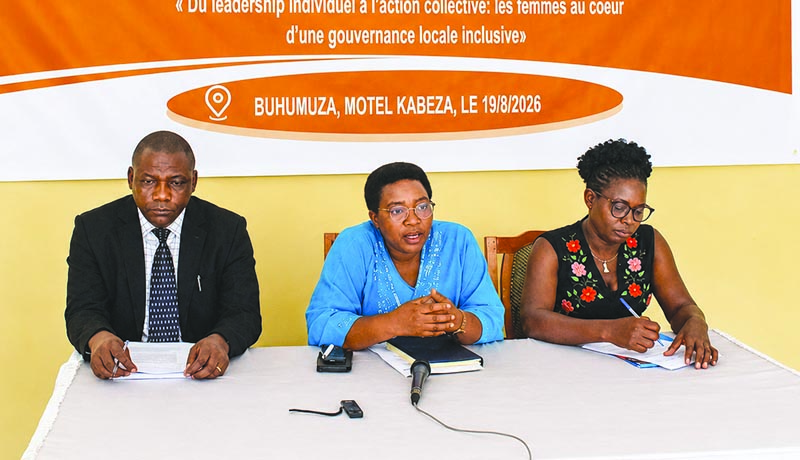
The province of Buhumuza, Burundi, recently hosted the sixth session of Débats-Café, an event focused on political female leadership and inclusive local governance. The gathering took place in the only Burundian province currently led by a woman, providing a significant backdrop for discussions on women's roles in public life. This initiative aims to foster greater participation of women in local governance structures and decision-making processes across the country, recognizing their vital contribution to community development. Discussions at the session centered on strategies to empower women leaders and ensure their voices are integrated into local development plans, promoting a more representative and effective governance framework. The event shows ongoing efforts to enhance gender equality within Burundi's political landscape, pushing for tangible progress in women's empowerment at all levels of administration.
Project Aims and Scope
The Netherlands Institute for Multiparty Democracy (NIMD) organized the recent event as part of its Arpog project, a full initiative designed to bolster democratic participation. This initiative is being implemented by NIMD in a consortium that includes Afrabu and other partners, pooling expertise and resources to achieve its ambitious goals. Financial support for the project's activities is provided by the European Union, noting international commitment to strengthening democratic institutions and promoting gender equality in Burundi.
The Arpog project's core objective is to support political parties and civil society organizations in Burundi. These entities are intended to act as 'Guardians' to promote and safeguard the representation and participation of women and youth in the country's political processes. By empowering these key stakeholders, the project aims to create a more inclusive political environment where diverse voices are heard and valued. The project aims to strengthen their capacity to advocate for inclusive governance, ensuring that policies and decisions reflect the needs and aspirations of all segments of society, particularly those traditionally underrepresented. This strategic approach seeks to embed principles of equality and participation deeply within Burundi's political fabric.
Débats-Café Sessions in Action
The recent Débats-Café meeting, focusing on political female leadership and inclusive local governance, was held in Cankuzo on Wednesday, August 19, 2026. This gathering marked the latest in a series of events designed to promote women's participation in local decision-making, building momentum for sustained change. The choice of Buhumuza province, led by a woman, further amplified the message of female leadership and served as an inspiring example for participants. The discussions delved into practical mechanisms for women to assume leadership roles and influence policy outcomes at the community level.
Previous iterations of the Débats-Café sessions were organized in Burundi's other key locations, demonstrating a broad geographical reach for the initiative. Events took place in both Bujumbura and Gitega at various points between 2025 and 2026, engaging a wide array of local leaders, community members, and civil society representatives. These meetings collectively aim to broaden the engagement of women leaders across different regions of the country, fostering a more inclusive approach to local governance. Each session provides a platform for dialogue, experience sharing, and strategic planning, contributing to a growing network of empowered women leaders. The initiative seeks to ensure that diverse perspectives are represented in discussions concerning community development and policy formulation, leading to more equitable and effective outcomes for all citizens.
Voices on Empowerment and Inclusion
The initiative aims to strengthen women leaders so they can secure their place in local decision-making bodies without waiting to be co-opted. This proactive approach emphasizes the importance of women actively seeking and attaining positions of influence through their own capabilities and advocacy. This objective aligns with the national development vision for 2040-2060, which places inclusion and social cohesion at the center of strategic priorities, recognizing that true progress hinges on the participation of all citizens. This vision emphasizes the importance of diverse representation in all levels of governance, from local councils to national policy-making bodies. By empowering women to take on leadership roles, the Débats-Café sessions directly contribute to realizing this long-term national aspiration. The project ultimately seeks to build a resilient and equitable society where women are not just beneficiaries of development, but active architects of their communities' futures.