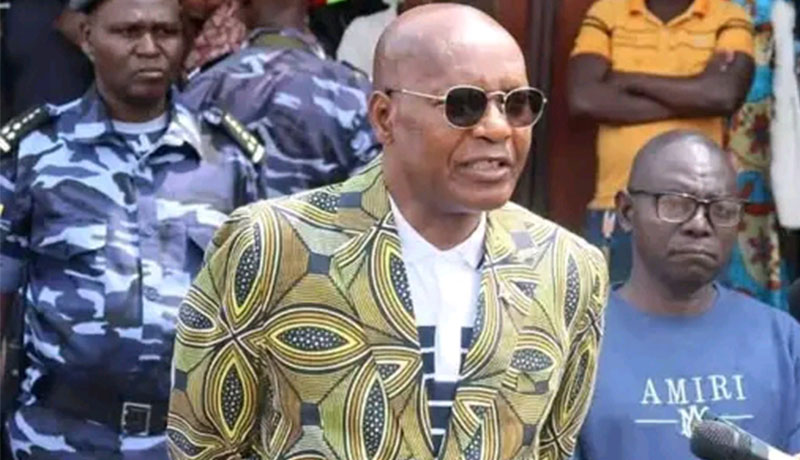
Daniel Gélase Ndabirabe, President of the National Assembly, declared on August 25, 2026, that the legislative body lacks the authority to summon ministers for questioning, sparking debate over parliamentary oversight in Burundi. This statement followed deputies' missions to the provinces of Bujumbura, Gitega, and Butanyerera. After these missions, deputies expressed a desire to question relevant ministers regarding unimplemented decisions and recommendations.
President Ndabirabe stated, "Nous n’avons pas le droit de convoquer les ministres pour répondre à nos questions. Non, nous n’en avons pas le droit. Pourtant, il nous arrive de dire : Nous avons convoqué trois ou quatre ministres. Mais est-ce que nous en avons réellement le droit ?" In contrast, deputies asserted, "Parmi nos missions, il y a le contrôle de l’action gouvernementale en se basant sur la loi."
Parliamentary Prerogatives Defined
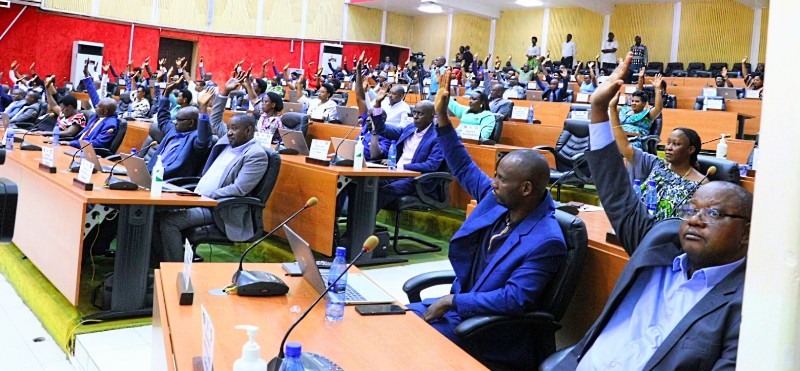
The National Assembly President's declaration occurred during a session where deputies presented reports from missions conducted during the July parliamentary recess. Reports from deputies documented various issues, including fertilizer shortages and the presence of harmful alcoholic beverages in the provinces. These findings emerged from their oversight activities in areas such as Bujumbura, Gitega, and Butanyerera.
Deputies, however, countered the President's assertion regarding their summoning rights, stating that their mandate includes oversight of government actions. They affirmed their constitutional role, asserting, "Parmi nos missions, il y a le contrôle de l’action gouvernementale en se basant sur la loi." This position emphasizes that their responsibilities are legally defined and encompass the monitoring of ministerial conduct and policy implementation. The deputies' insistence on their right to scrutinize government performance notes a fundamental divergence in the interpretation of parliamentary prerogatives within the Burundian legislative body.
Constitutional Basis for Oversight
Léonce Ngendakumana, a former president of the National Assembly, asserted that deputies possess a constitutional right to question ministers, including the Prime Minister. Ngendakumana stated, "D’emblée, au cas où les députés et les sénateurs n’auraient pas ce droit, rien d’autre justifierait leur existence. Ils ont ce droit y compris celui de convoquer le Premier ministre." He noted Article 7 of the Constitution of the Republic of Burundi, which addresses national sovereignty. "C’est un droit constitutionnel," Ngendakumana explained, adding, "L’article 7 est libéré comme suit. La souveraineté nationale appartient au peuple qui l’exerce soit directement par la voie du référendum, soit indirectement par ses représentants, c’est-à-dire les députés et sénateurs. Aucune partie du peuple, aucun individu ne peut s’en attribuer plutôt l’exercice."
Ngendakumana further referenced Article 163 of the Constitution, which stipulates that Parliament is responsible for voting on laws and controlling government action. He said that the mandate of deputies and senators is defined by the Constitution itself, not by the President of the National Assembly. "Le mandat des députés et sénateurs n’est pas défini par le président de l’Assemblée nationale, il est défini par la Constitution," Ngendakumana affirmed. He also suggested that the Assembly President's recent statement might have been a misinterpretation of the law. "Je crois, je pense qu’il a été mal interprété ou mal compris. Il a géré en contradiction avec la Constitution de la République du Burundi. Et cela n’est pas autorisé, cela n’est pas permis, cela n’est pas autorisé," he added.
Additionally, Faustin Ndikumana cited Article 207 of the Constitution, which specifically grants the National Assembly the power to inquire about government activity through both oral and written questions. The Constitution allocates one session per week during parliamentary sittings for deputies and senators to pose questions and for the government to provide responses. This procedural provision underlines the established mechanism for legislative oversight. Deputies have maintained their stance that their responsibilities include the control of governmental action, stating, "Parmi nos missions, il y a le contrôle de l’action gouvernementale en se basant sur la loi."
Criticism and Broader Implications
Daniel Gélase Ndabirabe, President of the National Assembly, stated that deputies do not possess the right to summon ministers for questioning. Ndabirabe articulated this position, saying, "Nous n’avons pas le droit de convoquer les ministres pour répondre à nos questions. Non, nous n’en avons pas le droit. Pourtant, il nous arrive de dire : Nous avons convoqué trois ou quatre ministres. Mais est-ce que nous en avons réellement le droit ?" He attributed this stance to a misinterpretation of parliamentary prerogatives, suggesting confusion between the functions of deputies and government members. However, deputies maintained a contrasting view, asserting, "Parmi nos missions, il y a le contrôle de l’action gouvernementale en se basant sur la loi."
Faustin Ndikumana, Director of Parcem, countered Ndabirabe's assertion, stating that the claim parliamentarians cannot question government members is contrary to the law. Ndikumana emphasized, "Normalement, la séparation des pouvoirs constitue un pilier fondamental de la bonne gouvernance et de la démocratie dans un pays. Dire que les parlementaires n’ont pas le droit de demander des informations aux membres du gouvernement ou de les questionner est contraire à la loi." He cited Article 207 of the Constitution, which specifies that the National Assembly can inquire about government activity through both oral and written questions. Ndikumana further explained, "L’article 207 de la Constitution précise que l’Assemblée nationale peut s’informer sur l’activité du gouvernement par la voie des questions orales ou écrites."
According to Ndikumana, the powers of oversight extend beyond simple questions, constituting significant prerogatives that enable Parliament to control government actions and contribute to good governance and democracy. "Les pouvoirs de contrôle vont au-delà des simples questions adressées aux ministres," he stated, adding, "Ce sont de grandes prérogatives qui permettent au Parlement de contrôler l’action du gouvernement et de contribuer au renforcement de la bonne gouvernance et de la démocratie." He also stressed that ministers appearing before Parliament should not take their responsibilities lightly, as they face an institution representing the people's mandate. Ndikumana concluded, "Les ministres, quand ils se présentent au Parlement, ne doivent pas continuer à se la couler douce. Ils sont devant une institution qui détient le mandant du peuple et ils devraient venir justement éclaircir tout ce qui est lié à la gestion des affaires du ministère des ressorts."