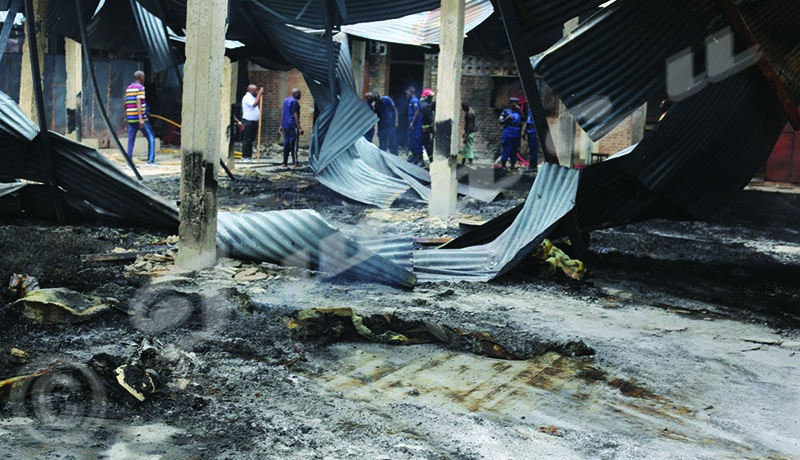
Bujumbura, Burundi has experienced a series of devastating fires, with three incidents occurring within four days, impacting local businesses and causing widespread concern. On one occasion, a significant portion of the Kinindo market in the southern part of the city was engulfed in flames, leading to substantial material losses for numerous traders. This particular fire originated at gallery Ndayizamba around 6:30 AM before rapidly spreading to the adjacent gallery Le Parisien, causing extensive damage to both establishments and their surrounding areas. The rapid succession of these incidents has raised questions about safety protocols and the underlying causes, leaving many in the business community reeling from the sudden destruction of their livelihoods.
The recurring nature of such disasters has cast a shadow over the commercial landscape of Burundi's capital. The fires have not only destroyed physical infrastructure but have also deeply affected the economic stability of many families who rely on these markets for their income. The sheer scale of the damage, particularly in the city center and the Kinindo market, shows the vulnerability of local enterprises to such catastrophic events. The community now faces the daunting task of recovery and rebuilding amidst differing official narratives regarding the origins of these destructive blazes.
Devastation and Loss for Merchants
Two galleries in the bustling city center of Bujumbura were completely destroyed by fires, impacting numerous businesses and leaving a trail of economic hardship. The fires at galleries Ndayizamba and Le Parisien occurred on the morning of Friday, August 21, 2026, transforming vibrant commercial spaces into ruins. These specific galleries were primarily occupied by merchants who had previously been affected by the January 27, 2013 fire that ravaged the central market of Bujumbura, noting a tragic pattern of repeated losses for many of these entrepreneurs. The Kinindo market fire, another recent incident that contributed to the series of blazes, began in the section dedicated to selling mattresses before spreading uncontrollably throughout the market area, exacerbating the overall damage across the city. The speed and intensity with which these fires consumed businesses left little time for merchants to salvage their goods, resulting in near-total losses for many.
The personal stories of those affected paint a stark picture of the devastation. Among those impacted by the recent central market fires was Jacqueline Ndayizeye, a merchant whose stock, valued at an estimated 100 million BIF, had arrived just the day before the incident. "A consignment worth 100 million BIF had arrived the day before," Ndayizeye stated, reflecting on the immediate and overwhelming loss she experienced. The fire destroyed her entire inventory, leaving her with nothing. She expressed profound concern regarding her financial obligations, saying, "I don't even know how I'm going to repay," a sentiment echoed by many others facing similar predicaments. This incident represents a recurring challenge for Ndayizeye's family, as her husband had previously lost merchandise estimated at 50 million BIF in the devastating 2013 central market fire, illustrating a painful history of economic setbacks due to such catastrophes. The cumulative impact of these events on individual families is immense, often erasing years of hard work and investment in a single morning.
The emotional and financial toll extends beyond immediate inventory losses. Many merchants operate on credit, and the destruction of their stock means not only a loss of income but also the burden of debt without the means to repay it. The sight of their businesses reduced to ashes is a deeply traumatic experience, especially for those who have invested their life savings and years of effort into building their enterprises. The community faces a significant challenge in supporting these individuals and helping them navigate the complex path to recovery, which often involves not only financial assistance but also psychological support to cope with such profound losses. The repeated nature of these fires also raises questions about the resilience of the local economy and the effectiveness of preventative measures in place.
Conflicting Official Explanations
In the wake of the destructive fires, official statements have offered differing perspectives on their origins, contributing to uncertainty among the affected business community. Alain Ndikumana, Minister in charge of Finance, stated that thorough investigations would be conducted into the origin of the Kinindo fire, emphasizing that officials could not rush to conclusions. "On ne peut pas se précipiter pour dire d’où est parti le feu. Des enquêtes seront menées," Minister Ndikumana said, signaling a cautious approach to determining the cause. This commitment to investigation offers a glimmer of hope for clarity. However, Révérien Ndikuriyo, Secretary General of the ruling party, offered a different perspective regarding the Ndayizamba gallery fire, claiming that the gallery was already open and occupied when the fire broke out. Ndikuriyo stated, "La galerie était déjà ouverte. Une personne qui y travaille se trouvait déjà à l’intérieur, même si le feu n’avait pas commencé dans son échoppe," providing specific details that suggest a potential human element or activity at the time of ignition, even if not directly implying fault.
The fires have resulted in significant financial losses for traders, many of whom have seen their entire livelihoods vanish. Eraste Nduwimana, whose business turnover reached nearly 40 million BIF, expressed the complete devastation, stating simply, "Il ne me reste rien." His journey began with a capital of 10 million BIF, which he had painstakingly grown into a thriving enterprise, now reduced to nothing. Joséphine Ndihokubwayo's business, which specialized in wedding dress rentals, was valued at approximately 40 million BIF, representing a substantial investment in specialized inventory. Beyond the material damage, Ndihokubwayo's business provided employment for six women, who are now unemployed following the fire, noting the ripple effect of these disasters on the broader community and local job market. The loss of these jobs further compounds the economic hardship in the affected areas, as families lose their primary source of income.
Joséphine Ndihokubwayo voiced profound frustration over the repeated incidents and the perceived lack of official response or preventative action. "Il y a des incendies successifs. Pas d’enquêtes, pas de soutien aux victimes et pas de protection pour que cette situation ne se répète pas," she said, noting a distressing pattern of fires without clear resolutions or effective preventative measures being implemented. This sentiment reflects a growing concern among merchants about the safety and security of their business environments. The fire at Kinindo market, despite its destructive path, was eventually brought under control through the combined efforts of civil protection police, firefighters, and local merchants who courageously assisted in battling the blaze, demonstrating community resilience in the face of adversity. The contrasting official statements and the substantial losses show the profound challenges faced by Bujumbura's business community in the wake of these destructive events. The Minister's promise of investigation provides some assurance that the causes will be sought, yet the ruling party official's immediate detail about the gallery's status adds to the complexity of understanding the fires' origins and fuels public speculation. This divergence in official narratives can also hinder a unified approach to prevention and recovery, leaving victims feeling uncertain about the future.
Calls for Investigation and Support
The series of devastating fires has prompted urgent calls for thorough investigations and full support for the victims. Prosper Bazombanza, Vice-President of the Republic, offered a preliminary suggestion regarding the cause of the fire at the galleries, indicating that electric irons with charcoal might have been responsible. "We suspect that it was probably charcoal irons that may have caused this fire," the Vice-President stated, adding that he did not believe the fire was criminal given the early hour of the incident. "It was too early in the morning, there was no one inside. I dare not imagine that it was a fire of criminal origin," Bazombanza said, attempting to allay fears of deliberate arson. This hypothesis, while offering a potential explanation, still requires strong investigation to be confirmed.
Despite the Vice-President's suggestion of an accidental cause, Gabriel Rufyiri, President of the Anti-Corruption and Economic Malpractice Observatory (Olucome), warned that the series of fires could lead to a significant loss of confidence among merchants and potential investors. Rufyiri emphasized the critical need for thorough and impartial investigations into each incident, stating, "Accidental fire or criminal act? Each case must be the subject of a serious investigation." He stressed that without clear answers and accountability, the economic environment would suffer.
Rufyiri further noted the profound psychological impact on those affected, noting, "Psychologically, people are so touched." The loss of one's livelihood, often built over many years, can lead to severe emotional distress, anxiety, and despair. He also pointed to the broader economic implications, asserting that "investors who come to our country in such a context, it will be very complicated." The perception of instability and insecurity, particularly concerning business assets, can deter both domestic and foreign investment, thereby hindering economic growth and development. For some traders, the losses are total and irrecoverable; Eraste Nduwimana, who started his business with a modest capital of 10 million BIF, saw his turnover reach nearly 40 million BIF before the recent fire. "I have nothing left," Nduwimana said, his words reflecting the complete devastation experienced by many who have lost everything. The destruction of his business represents not just a financial setback but the obliteration of years of hard work and aspirations.
The human toll extends far beyond financial ruin, as showed by psychologist Alain Joseph Hatungimana. Hatungimana emphasized the critical need for mental health support for fire victims, asserting, "The reconstruction of a victim begins with the recognition of their suffering." He explained that beyond the immediate material losses, individuals often experience grief, trauma, and a profound sense of loss of identity and security. Providing psychological first aid and ongoing counseling is key for helping victims process their experiences and begin the long journey of recovery. This perspective shows the broader impact of the fires on the community, which extends beyond material losses to include significant psychological distress for those who have lost their livelihoods and witnessed their dreams turn to ashes. The calls for serious investigations from civil society and the recognition of the need for mental health support highlight the multifaceted challenges facing Bujumbura in the wake of these destructive incidents. A holistic approach, combining economic aid, strong investigations, and psychological support, will be essential for the community to heal and rebuild.