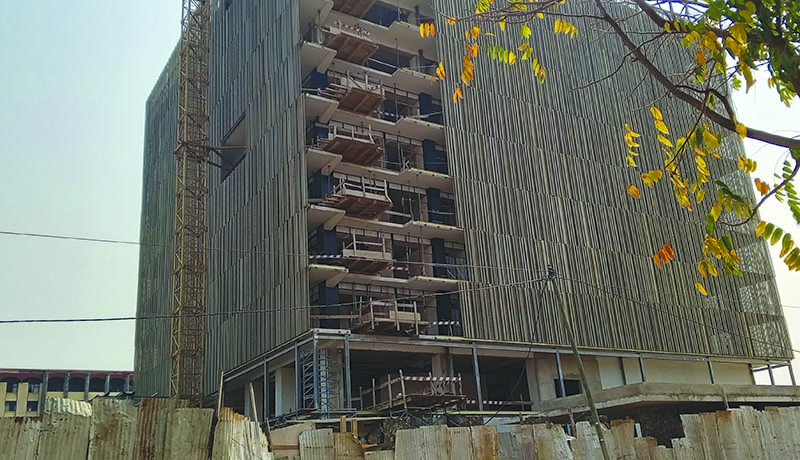
Construction of the Banque de la République du Burundi (BRB) headquarters, located on the Rumonge road near the Ministry of Public Service, commenced in January 2019 on a 36,000 m² plot. The ambitious project, designed to house the central bank's operations, was initially slated for completion by August 2026. However, the development has experienced significant delays, raising questions about its ultimate timeline and cost. The site, strategically positioned on the Rumonge road, is a prominent location intended to reflect the institution's importance. On November 5, 2025, Vice-President of the Republic Prosper Bazombanza visited the BRB construction site to assess progress and gain first-hand insight into the challenges faced. During his inspection, Vice-President Bazombanza stated that the project had reached a 65% completion rate, a figure that has been met with scrutiny given the overall timeline. The Vice-President's visit showed the government's interest in the project, even as concerns about its protracted nature continue to mount.
Delayed Progress and Comparisons
The construction of the BRB headquarters began concurrently with the Bancobu headquarters project, offering a direct comparison in terms of project management and execution. While the Bancobu headquarters is currently operational and serving its purpose, the BRB headquarters is described as not yet halfway complete, noting a significant disparity in progress between the two financial institutions' building endeavors. This stark contrast in completion rates has drawn attention to the underlying issues affecting the BRB project. The BRB construction site is now reportedly in a new phase, focusing on interior works. This stage includes critical tasks such as tiling, partitioning, plumbing, plastering, and painting, indicating a shift from the initial structural development to the more detailed finishing stages. Despite this progression to interior work, the overall pace of construction remains a point of concern for stakeholders and the public alike. The transition to interior finishing suggests that the major structural elements are in place, but the extensive nature of these final stages can also contribute to delays if not managed efficiently.
Reasons for Stalled Construction
The extended timeline for the Banque de la République du Burundi (BRB) headquarters project aligns with broader patterns of protracted construction initiatives observed across Burundi. These delays are not isolated incidents but rather reflective of systemic challenges in public works. One such instance involves the central market, for which reconstruction efforts have been announced for a decade without completion. The delay in this key urban development project has left a significant public facility in a state of prolonged inactivity, impacting local commerce and daily life. The market's stalled rebuilding reflects ongoing challenges in project execution and resource allocation within the country's infrastructure sector, demonstrating a consistent difficulty in delivering promised developments.
Another long-standing infrastructure undertaking is the Jiji-Mirembwe project, which has been under construction for over a decade. This project, intended to address critical infrastructure needs, notes persistent issues with project management and timely delivery that span across various sectors. The Jiji-Mirembwe project's prolonged construction timeline serves as another example of the difficulties faced in bringing large-scale public works to fruition in Burundi. Both the central market reconstruction and the Jiji-Mirembwe project illustrate a recurring challenge in completing major public works within their anticipated schedules. The difficulties encountered by these projects provide a comparative context for the delays now affecting the BRB headquarters, suggesting systemic obstacles that can prolong construction phases over many years and impact national development goals. These examples paint a picture of an environment where infrastructure projects frequently miss deadlines and incur additional costs.
Expert and Public Concerns
The prolonged construction of the Banque de la République du Burundi (BRB) headquarters has generated significant concern among financial experts and public observers in Burundi. Bellarmin Bacinoni, an economic expert, expressed his apprehension regarding the project's timeline, emphasizing the substantial costs associated with such extended delays. He noted that prolonged construction not only inflates the budget through increased material and labor costs but also postpones the potential economic benefits that a new, fully operational headquarters could bring, such as improved efficiency and a modern working environment for the central bank's critical functions.
Faustin Ndikumana, another prominent financial expert, echoed these concerns, showing the considerable financial burden placed on the BRB and, by extension, the Burundian public. Ndikumana pointed out that delays often lead to unforeseen cost overruns, diverting funds that could be allocated to other critical public services or economic development initiatives essential for the nation's progress. Gabriel Rufyiri, President of the Anti-Corruption and Economic Malpractice Observatory (Olucome), also voiced strong criticism regarding the slow progress. Rufyiri specifically called for the BRB and the government to provide clear explanations for the protracted timeline, demanding transparency and accountability for the significant public funds invested in the project. These experts collectively emphasize the urgent need for greater efficiency and oversight in public infrastructure projects within Burundi, advocating for measures to prevent similar delays in future developments and ensure responsible use of public resources. The lack of clear communication regarding the causes of these delays has further fueled public speculation and expert criticism.